
Don Blazer
Archives:
Stop Coggins Slaughter!
More on EIA
The Latest on EIA
Where Are The EIA Facts?
Taxes and Horses
Foaling
Albinos
Breeding
Horse Eyes
Wood Chewing
Safe Trailering
Back Country Horsemen
New Years Resolutions
Horses Legs
Middle Ages
Pony Club
Minature Horses
Saddle Training
Race Horses
Liability
Medications
Brown Jack
Patriotic Horses
Model Horses
Communication
Vaulting
Exercise your Horse
Buying a Horse
Horse Heros
Walter goes Hollywood
Stifles
Flying Horses?
Don't eat like a Pig
Parasites
Back Sore?
Goat Hero
Communication
Foals
History of Horses
Jumping Horses
Lameness and Health
Kick the IRS
Who's Walter?
Books by Don Blazer
View Our Catalog
Secure Book Order Form
Don Blazer
A Horse, Of Course
Secure Book Order Form
Order using our Secure Order Form

Walter (A Horse, of Course) Spills the Oats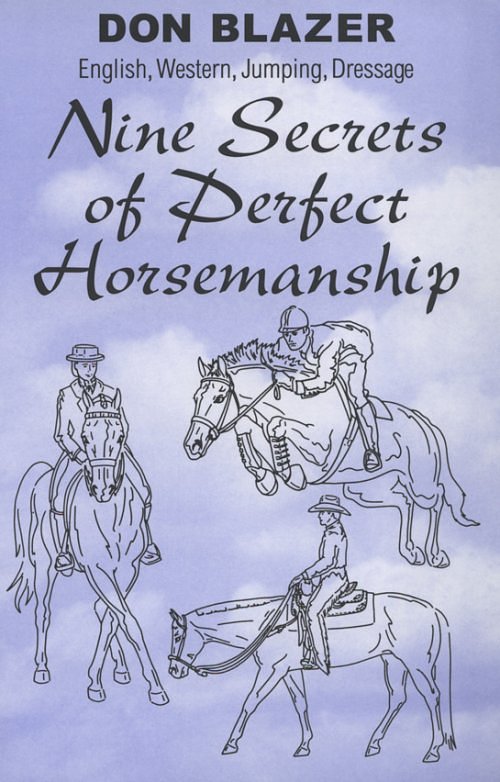
Nine Secrets of Perfect Horsemanship
This is a Secure Web Site
Order using our Secure Order Form
View Our Catalog
This is a Secure Web Site


Ah, the joy of being a new parent. Even if that funny, long-legged baby does have silly, crooked whiskers.
It's foaling time. And while spring is bursting out all over, so are the baby horses.
The birth of a foal is a beautiful and exciting experience, but there can be danger.
Understanding the foaling process eliminates some dangers, but unskilled or untimely assistance increases the chances for disease, even death, for foal, mare or both.
Nature has this birthing thing worked out pretty well, says Dr. Jack. "Most of the time it is best if owners and friends watch, but don't get involved. In too many cases overly helpful owners create problems where there were none."
Dr. Jack recommends three things be on hand at foaling time:
The Betadine solution is to be poured on the foal's navel cord stump as soon as possible. The cord represents a direct passage to the foal's bladder and blood supply to the liver, Dr. Jack explains. And infection in this passage is transmitted to the rest of the foal's system
and can easily result in joint or navel ill, a severe disease which causes death in about 1 per cent of all foals. If joint ill is not fatal, it can often compromise the foal's future performance ability.
Infection of one kind or another is undoubtedly the biggest threat to the newborn. Infection can be transmitted from the mare, but most often today it is due to dirty conditions at the site of the birth.
It is not a good idea, Dr. Jack says, to let a mare foal on dirt or in contaminated pen or pasture.
And it is mandatory the foal's navel stump be treated, for several days if necessary, until it dries completely.
The clean towels are used to dry the foal after birth. It isn't necessary you do this, but it is fun, it helps to imprint the foal to humans and it keeps the foal from becoming chilled while it gets the circulation going.
If the weather is nice, the best place for the mare to foal is a clean, large, grassy pasture. But if you want the mare sheltered, be sure to put her in the biggest stall possible. Bed the stall with clean straw, and keep the stall clean.
As an observer, your job is the look for signs of an abnormal birth presentation, Dr. Jack says. Look, but at the same time try not to get the mare as excited as you are, he advises.
If anything other than the two front feet and the head should appear, or if nothing appears after 15 minutes of hard labor, call your veterinarian, describe exactly what you see and follow instructions carefully.
If the sack is still over the foal's head after the birth process is complete, stick your clean fingers through the membrane at the foal's mouth, then pull the sack back away from the nostrils so the foal can breathe. Don't do anything else until the mare has cleaned the foal and both have had some time to relax. Then put the iodine on the foal's navel cord and rub the foal with the clean towels.
It will take from five minutes to three hours for the mare to expel the afterbirth, Dr. Jack says. Collect the afterbirth so it may be checked by your vet so everyone is sure nothing has been retained.
When the foal decides it's time for a snack, he'll try to get to his feet. Actually standing can take from 15 minutes to an hour. You'll want to help ease the baby's struggle, but don't. Dr. Jack says the exercise is good for the youngster and helps stimulate his appetite.
The foal should be nursing within two hours. If he isn't, a little assistance may be helpful.
Don't try to push the foal toward the mare. He won't go.
Stand on the opposite side of the mare and try to get the foal to suck on your fingers. Then guide the foal toward the milk. A little squirt of milk on his nose gets his attention.
The foal should pass the meconium from the rectum shortly after having a good drink of milk, says Dr. Jack. If the foal shows continued signs of straining, tail elevation or cramping, call the vet. If you are very careful, you may give the foal a prepackaged enema.
Within 12 hours of foaling, have your vet check both the mare and foal and administer disease-preventing medication.
As simple as it is, that's the wonderful miracle of foaling.
Each month you'll find a new column on our web site. We hope you'll enjoy it, and maybe
e-mail us with questions or suggestions for other
columns. A Horse, Of Course is a weekly column syndicated
by Success Is Easy. If you like the column, call your local newspaper, or local horse
publication and ask them to subscribe by contacting Success Is Easy, 7119 East Shea Blvd. Suite 109-271, Scottsdale, AZ 85254 |
________________________________
A Horse Of Course |
On-Line Catalog |
Who's Walter?
Courses and Clinics |
Horse Training |
Meet Don Blazer
Ask Don Blazer |
Horses for Sale |
News Flash
Stop Coggins Slaughter! |
Horse Links |
HOME
Info@donblazer.com
Copyright © 2000 by
Don Blazer
Success Is Easy, 13610 N. Scottsdale Rd., Suite 10-406, Scottsdale, AZ 85254
Vanndal Web Designs